

Enmeshment: Signs of an Enmeshed Family and How to Heal
Your mom calls every day, and if you miss one, she’s hurt for the rest of the week. Your dad still weighs in on where you work and who you date. You love them, but you can’t quite tell where their feelings end and yours begin.
We call that tangle enmeshment, which is when family closeness slides into blurred boundaries and people start feeling responsible for each other’s emotions. It usually starts with real love, which is why it’s hard to see from the inside.
In this article we explain its meaning, how it differs from a close and healthy family, the signs to look for, and what helps adults untangle themselves without cutting their family off. Read on…
 You’ll talk with Devika Rogersour Matching Specialist
Start with a free 20-minute matching consultation.
Phone line open· closes at 4:30 pm
Phone line closed· opens the next business day at 8:00 am
Help us find your match. Our Matching Specialist will be in touch.
Help us find your match. We’ll contact you the next business day.
View profiles & book online
What Is Enmeshment?
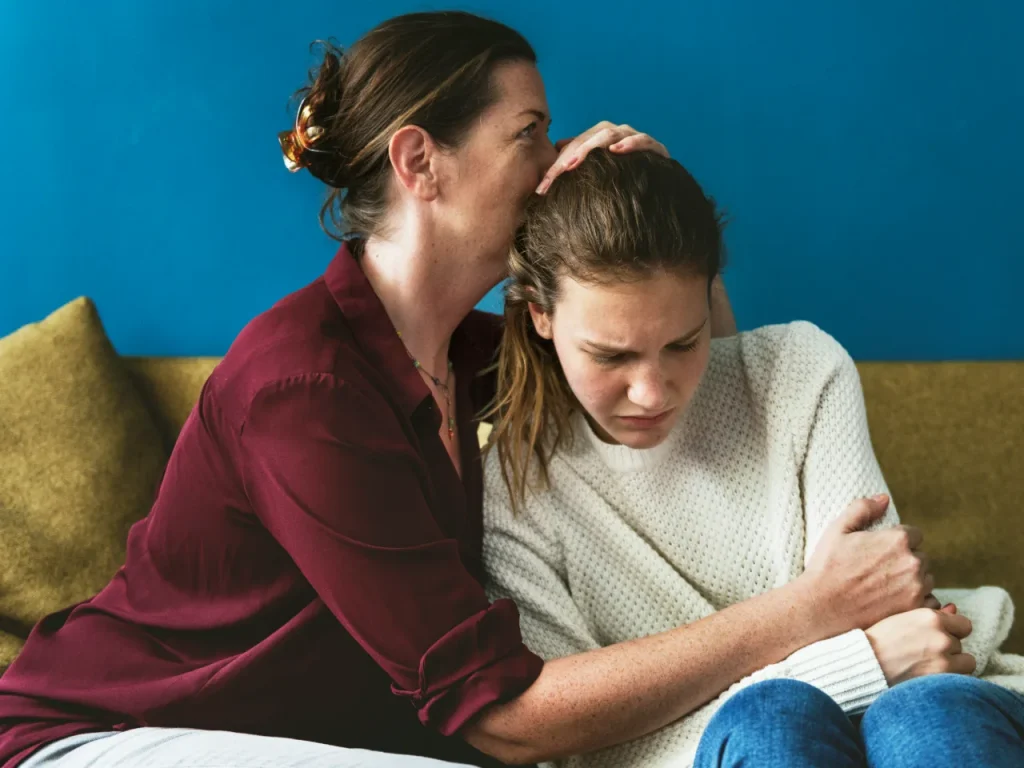
Enmeshment is a family pattern where the personal boundaries between family members are blurred, so people lose their sense of being separate individuals. In our sessions, people describe it as never quite knowing which feelings are theirs.
Family therapist Salvador Minuchin introduced the term enmeshment in 1974 while studying how families are organized. He noticed that in some families the lines between parents and children were so diffuse that members became overly involved in each other’s feelings and decisions (Simply Psychology). Family systems theory, which looks at the family as one connected unit instead of a group of separate people, still uses the idea today.
Enmeshment in a relationship between partners works much the same way: one person’s moods set the tone for both, and having separate friends feels like a threat. You may also hear it called emotional enmeshment. It isn’t a diagnosis. It’s a way of describing family dynamics, and enmeshment can take different shapes, showing up between a parent and child, between siblings, or across a whole household. Many people only recognize it later, when they try to build an adult relationship of their own and find their parents still expect a seat at the table.
If recognizing the signs has you wondering whether this describes your home life, it might help to talk it over in individual counselling, where nobody else gets a vote.
Enmeshment vs. Healthy Family Closeness
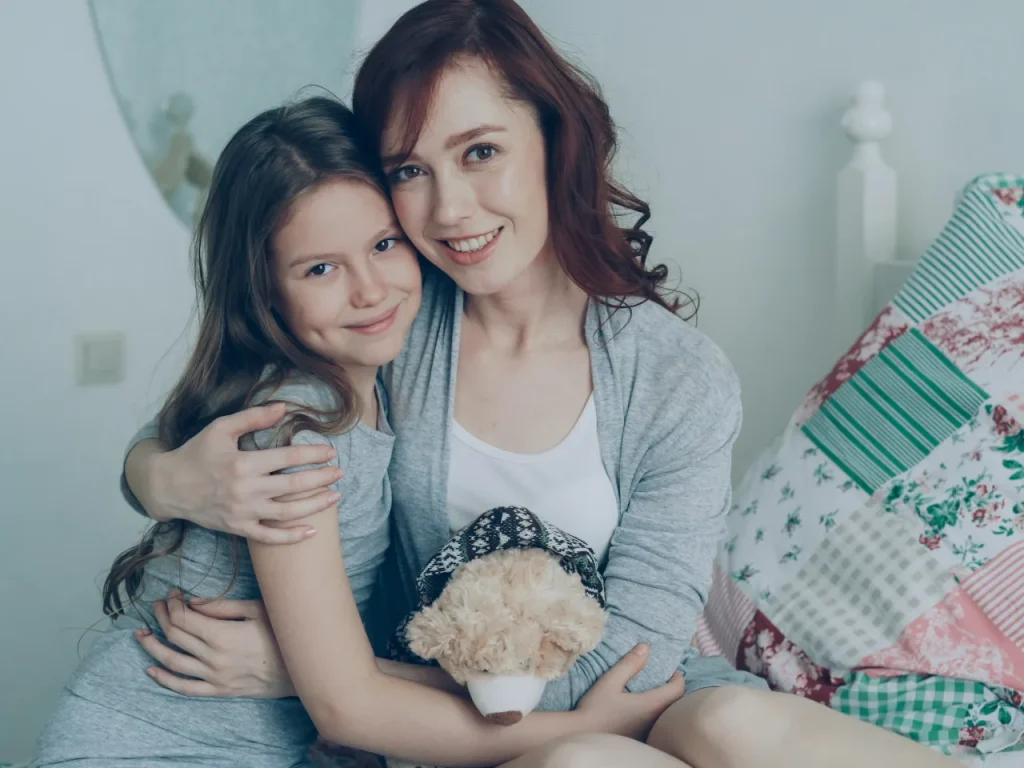
The difference between enmeshment and closeness really comes down to boundaries. In a close family you can disagree with your dad about your career and still feel welcome at Sunday dinner, because each person’s autonomy is respected. Enmeshed families often treat that kind of difference as a threat to the bond.
Researchers have backed this up. A well-known study by Barber and Buehler looked at family cohesion and enmeshment as separate things. Warmth and support were linked to fewer problems in kids, while control and blurred boundaries were linked to more (Simply Psychology).
Here is how the two tend to look side by side:
- Making decisions. In close homes, parents give advice and then respect your choice. In an enmeshed family, choosing differently feels like you’ve let everyone down.
- Privacy. Close parents accept that some things are yours alone. Enmeshed ones expect to know about your money, your marriage, and your medical appointments.
- Emotions. Close relatives care when you’re upset. In enmeshed homes, someone else’s bad mood becomes your job to fix.
- Outside relationships. Close relatives welcome your friends and partners. Enmeshed ones may see them as competition.
Culture matters here, too. Many families in Canada come from traditions where living near relatives and staying deeply involved is normal and healthy. Healthy families can be very close, and closeness on its own isn’t family enmeshment. The problem starts when there’s no room left to be yourself. Talking it over with someone outside the family, even through online counselling, can help you see where yours falls.
Signs of Enmeshment in a Family

The biggest warning signs we hear about are guilt whenever you set a limit and a sense that a parent’s happiness is your job. Many people also struggle to say what they want once their parents’ wishes are taken out of the picture. Recognizing enmeshment is often the first step toward change, since the pattern can feel completely normal from the inside.
You might notice that:
- Saying no to a family request makes you feel guilty or anxious for days.
- Your mom or dad vents to you about the mortgage or their marriage and expects you to make them feel better.
- A parent or another family member reads your texts, shows up without warning, or gets upset when you keep something private.
- You were expected to stay close to home or take a certain career path instead of following your own interests.
- Disagreeing with anyone within the family gets treated as disloyalty.
- Your partner says your parents are “too involved,” and you feel caught in the middle. This is a common reason people come to couples counselling.
Do Enmeshed Families Know They’re Enmeshed?
Usually, enmeshed families don’t know it. When you grow up inside it, constant check-ins and shared secrets just feel like what love looks like. Many people only notice the pattern when a partner or a friend points it out, or when they move away for school and see how differently other households run. Teens who feel squeezed by family expectations can get support through teen counselling.
When a Parent Relies on Their Child
A very common version of enmeshment happens when a parent relies on their child for emotional support. After a divorce, an illness, or a death, a lonely parent may start treating a child like a best friend or a therapist. The child becomes overly responsible for the parent’s mood and learns to put their own needs last. Therapists call this role reversal parentification. Mother-son enmeshment is a familiar example. A mom leans on her son as her main source of comfort, and years later he struggles to put his wife first without feeling like he’s betraying his mother. The same thing can happen between fathers and daughters.
If you’re a parent and some of this sounds familiar, don’t panic. Many loving parents slip into these habits during hard seasons. Parent counselling can help you find other sources of support so your kids can just be kids.
No waitlists. In-person in Barrie, Orillia, Newmarket, or online across Ontario.
Phone line open· closes at 4:30 pm
Phone line closed· opens the next business day at 8:00 am
Help us find your match. Our Matching Specialist will be in touch.
Help us find your match. We’ll contact you the next business day.
View profiles & book online
What Causes Enmeshed Family Dynamics?

Enmeshed family dynamics usually grow out of fear, loss, or family problems that never got resolved, not out of a wish to control. The pattern often gets passed down because the adults grew up in a dysfunctional family themselves and simply repeat the unhealthy family dynamics that felt normal.
Common roots include:
- A parent’s anxiety. When a parent worries constantly, keeping kids close can feel like the only way to keep them safe.
- Trouble in the marriage. A parent who feels alone with their partner may look to a child for closeness instead.
- Loss or illness. A death, a serious illness, or addiction can push relatives to cling to each other.
- Childhood trauma. Adults who grew up with neglect or chaos sometimes try to give their kids the closeness they never had, and overshoot.
- Emotionally immature parents. Some parents never learned to manage their own feelings, so children of emotionally immature parents end up managing those feelings instead.
None of this makes anyone a villain. Understanding where the pattern came from can soften blame and make it easier to change. If anger toward a parent is part of the picture, our article on complicated feelings about your mother may help.
Effects of Enmeshment on Adults

The effects of enmeshment often follow people into adulthood. A lot of the adults we see say they don’t really know who they are without their family’s opinion. People involved in enmeshed relationships as kids often become people-pleasers, and they struggle to keep healthy boundaries with friends and romantic partners. Anxiety and low mood are common too, especially when every step toward independence comes with guilt.
Research points in the same direction. In a 2021 study of 185 young adults, people from families that functioned less well had a weaker sense of self, and that weaker sense of self was strongly linked to higher anxiety (Dolz-del-Castellar & Oliver, 2021). Our anxiety counselling often touches on these patterns.
Enmeshment Trauma
Some therapists use the phrase enmeshment trauma to describe the lasting emotional impact of growing up this way. It’s not an official diagnosis, but it captures how this pattern can work as a type of childhood emotional trauma. Common trauma responses include freezing up during conflict, starting to feel anxious when someone is disappointed in you, and carrying shame about having needs at all. Our shame vs guilt article explains why that shame can be so sticky. The good news is that people can heal from enmeshment trauma.
Codependency and Romantic Relationships
Codependency is a close cousin of enmeshment. Both involve losing yourself in someone else’s needs. Adults who were enmeshed as kids may pick romantic partners who need rescuing, or they may swing the other way and keep partners at arm’s length. Our guides to anxious avoidant attachment and avoidant attachment in relationships describe both patterns.
How to Heal from Enmeshment

Once you recognize signs of enmeshment, healing from enmeshment means building a separate sense of self while staying connected to the people you love, if that’s safe. The goal is to build healthier relationships, not to end your family relationships. It takes practice, and it usually feels uncomfortable before it feels good.
Here’s where we usually suggest starting:
- Get to know your own preferences. Notice what you’d order at a restaurant or do with a free Saturday if nobody else had an opinion.
- Expect guilt, and don’t obey it. You’ll probably feel guilty when you set boundaries or break an old family rule, and that’s okay. The guilt is a sign of change, not proof you did something wrong.
- Set healthy boundaries one at a time. Pick one thing, like the daily phone call, and change it kindly: “I can’t talk every day, but I’d love to catch up on Sundays.”
- Build relationships outside the family. Join a rec hockey team, a book club, or a running group, anything that’s just yours.
- Let others handle their own feelings. You can care that your mom is upset without making it your job to fix. That’s what emotional boundaries look like in real life.
Setting Healthy Boundaries with Family
Keep it short and calm, and expect to repeat yourself. If your dad drops by without warning, try “Please text before you come over.” If someone turns hostile, our guide on how to deal with toxic family members covers when more distance makes sense.
How Therapy Can Help
Many clients arrive asking which beliefs are theirs and which came from their family of origin. In family therapy, everyone gets a turn to talk. Attachment-based therapy is another option we use.
We see families in person through family counselling in Barrie and family counselling in Newmarket, and by secure video across Ontario.
Final Thoughts
Enmeshment is usually built out of love that got tangled up with fear. Seeing it clearly doesn’t mean you have to reject your parents or decide they were bad people.
Breaking free from enmeshment means making room for yourself, not walking away. Many people keep a healthy relationship with family and still build a life that’s theirs.
If you’d like help with that, we’re here. Book a free 20-minute matching consultation, and our Matching Specialist will connect you with a therapist who fits your needs. Contact Family TLC to get started.
Frequently Asked Questions
Is enmeshment a form of abuse?
It can be, but often it isn’t. Most of the enmeshed parents we meet love their kids a lot.
- Intent matters less than impact: Love doesn’t cancel out the hurt, and the effects can follow you into adulthood.
- Where it crosses a line: Threats, punishment for independence, or using a child as a partner can be emotionally abusive.
- Your experience counts: You don’t need the word “abuse” to take your hurt seriously.
- Getting clarity: A therapist can help you make sense of what happened at home.
- Safety first: If you feel unsafe with a relative, reaching out for support is the right move.
Can enmeshment happen between siblings?
Yes. It often happens when brothers and sisters had to lean on each other to get through a rough childhood.
- Shared survival: If you spent your childhood covering for each other, it makes sense that you’re still tightly bound.
- Caretaking roles: Plenty of older sisters still feel responsible for a younger brother well into their thirties.
- Loyalty pressure: Saying no to a sibling might feel like walking out on them.
- Partner tension: Spouses sometimes feel shut out of a very tight sibling bond.
- Room to grow: You can stay close and still build lives that look different from each other.
Is enmeshment the same as codependency?
They overlap a lot, but one describes a family system, while codependency usually describes a pattern in one relationship.
- Enmeshment: This describes blurred boundaries across a whole household, usually starting in childhood.
- Codependency: This means putting another person’s needs ahead of your own to keep a relationship going.
- The link: If you grew up enmeshed, a codependent relationship can feel like home.
- Shared fix: Both get better as you learn what you want.
- Support: Individual or couples counselling can help with either one.
Can enmeshment be healed?
Yes. Recovering from enmeshment trauma is very possible, though it takes patience and practice.
- Awareness: Once you can name the pattern, it gets easier to catch in the moment.
- Small steps: One boundary at a time tends to stick better than a big blow-up at Thanksgiving.
- Self-discovery: Trying new things on your own helps rebuild your individuality.
- Support: It helps to practise in therapy sessions before you try it with your family.
- Relationships can improve: Many families adjust once boundaries are held kindly and consistently.
How does enmeshment affect marriage?
It can put a strain on a marriage when one partner’s parents stay more involved than the couple wants.
- Divided loyalty: One partner may feel torn between their spouse and their parents.
- Decisions: In-laws may expect a say in money, holidays, or parenting.
- Resentment: The other partner can start to feel like an outsider in their own home.
- Teamwork: Couples do best when they agree on boundaries together first.
- Help is available: Couples counselling can make these conversations less heated.
Take the next step in whichever way suits you best.
Phone line open· closes at 4:30 pm
Phone line closed· opens the next business day at 8:00 am
Help us find your match. Our Matching Specialist will be in touch.
Help us find your match. We’ll contact you the next business day.
View profiles & book online