Major Life Changes Counselling

Major Life Changes Counselling: Support for Navigating Life Transitions

Devika Rogers, Matching SpecialistYou’ll talk with Devika Rogersour Matching Specialist

Start with a free 20-minute matching consultation.

Open now — a Matching Specialist can take your call

Phone line closed — leave a message and expect our call the next business day morning

Help us find your match. Our Matching Specialist will be in touch.

Help us find your match. We’ll contact you the next business day.

Call 705-737-3513

Prefer to talk? We’re here to listen

Leave a message after hours

Choose & Book a Therapist

View profiles & book online

How it works

Most people expect hard times to feel hard. What surprises them is how unsettled they feel after changes they chose, like getting married, starting a new role or having a baby. A life transition asks you to let go of an old rhythm and an old version of yourself before the new one feels real. In between, it’s common to feel anxious, flat, irritable or oddly lost. Others come to us after changes they didn’t choose: a separation, a layoff, a health diagnosis, the death of a parent, or kids leaving home. You don’t need a clear problem to start. Feeling stuck in the middle of a big change is reason enough.

Your therapist gives you space to process what you’re leaving behind and what you’re stepping into. Together you look at what the change means for your relationships, your work and your sense of self, then build practical ways to cope day to day. There’s no waitlist. Start with a free 20-minute matching consultation with our Matching Specialist, who will connect you with a registered psychotherapist or social worker on our team whose experience fits your situation.

Our team

nol feldman headshot

Nol Feldman

Registered Psychotherapist (Qualifying)

Golnoosh Shahbaz

Golnoosh Shahbaz

Registered Psychotherapist (Qualifying)

Smiling young woman in blazer against brick wall

Melanie Solomon

Registered Social Worker (MSW)

Soban Khalid

Soban Khalid

Registered Psychotherapist

helen khlaeghi headshot

Helen Khaleghi

Registered Psychotherapist

Nicole Reason

Nicole Reason

Registered Social Worker (MSW)

Smiling woman with brown hair and subtle makeup

Brooklyn Arroyo

Registered Psychotherapist

Jordhin Banner

Jorhdin Banner

Registered Psychotherapist

couples counselling

William Stanus

Registered Psychotherapist

couples counselling

Christina Furtado

Registered Psychotherapist

bilikis

Bilikis Adebayo

Registered Social Worker (MSW)

Woman in green sweater and glasses smiling

Wendy Lee

Registered Psychotherapist

couples counselling

Natasha Stasiuk

Registered Social Worker (MSW)

[object Object]

Ilan Strauch

Registered Psychotherapist

stephanie carpino

Stephanie Carpino

Registered Social Worker (MSW)

couples counselling

Aria Martinez

Therapist Counsellor

Travis Ford

Travis Ford

Operations Manager

Devika Rogers, Matching Specialist

Devika Rogers

Matching Specialist

Emily Naranja

Emily Naranja

Internal Bookkeeper

Your roadmap

1

Intake Phase

Knowing what to expect

Your therapist makes sure you are fully informed about counselling, understand what to expect from Family TLC and the Family TLC Method, and have the information you need before moving forward.

2

Discovery Phase

Understanding what is happening

Together you explore what brought you to counselling and what you want to be different. Your therapist notices patterns and connections and works with you to develop a Care Plan with your concerns, goals and the approaches that may help.

3

Working Phase

Working directly on the goals

You and your therapist put your Care Plan into action. Your therapist uses therapeutic modalities, strategies and interventions based on your needs and what emerges in the work, reviewing what is helping and adjusting when needed.

4

Check-In Phase

Maintaining and building on your progress

Once your goals are achieved, appointments become less frequent. You use what you have learned independently while you and your therapist check how progress is holding up, reinforce what is working and decide if new goals have emerged.

5

Follow-Up Phase

Staying connected after active counselling ends

When you and your therapist agree that regular appointments are no longer needed, active counselling comes to an end. You remain connected with Family TLC and can reconnect with counselling in the future if support is needed again.

Is this you?

Did a change you wanted, like a new baby or a promotion, leave you feeling lost?

Are you still reeling from a loss, a layoff, a separation or a diagnosis?

Do you feel like you don’t quite know who you are anymore?

No waitlists. In-person in Barrie, Orillia, Newmarket, or online across Ontario.

Open now — a Matching Specialist can take your call

Phone line closed — leave a message and expect our call the next business day morning

Help us find your match. Our Matching Specialist will be in touch.

Help us find your match. We’ll contact you the next business day.

Call 705-737-3513

Prefer to talk? We’re here to listen

Leave a message after hours

Choose & Book a Therapist

View profiles & book online

A story like yours

Where we work

Three Offices and Virtual Care

Lake SimcoeAllistonElmvaleWasaga BeachPort PerrySuttonKeswickAngusInnisfil710111226354004044071Barrie2Orillia3Newmarket© OpenStreetMap
Bradford StLakeshore DrSanford StJohn St© OpenStreetMap

Barrie

160 Bradford St, Barrie, ON

South StNorth St ECalverley StBenner St© OpenStreetMap

Orillia

349 West St N, Unit 2A, Orillia, ON

Yonge StEagle St W© OpenStreetMap

Newmarket

17070 Yonge Street, Newmarket, ON

Anywhere in Ontario

Virtual

Secure video sessions anywhere in Ontario

FAQ

Life transitions encompass many kinds of change and happen at all life stages. Some are developmental transitions that most people go through, like leaving home, marriage, becoming a parent, kids moving out, or the end of a working life.

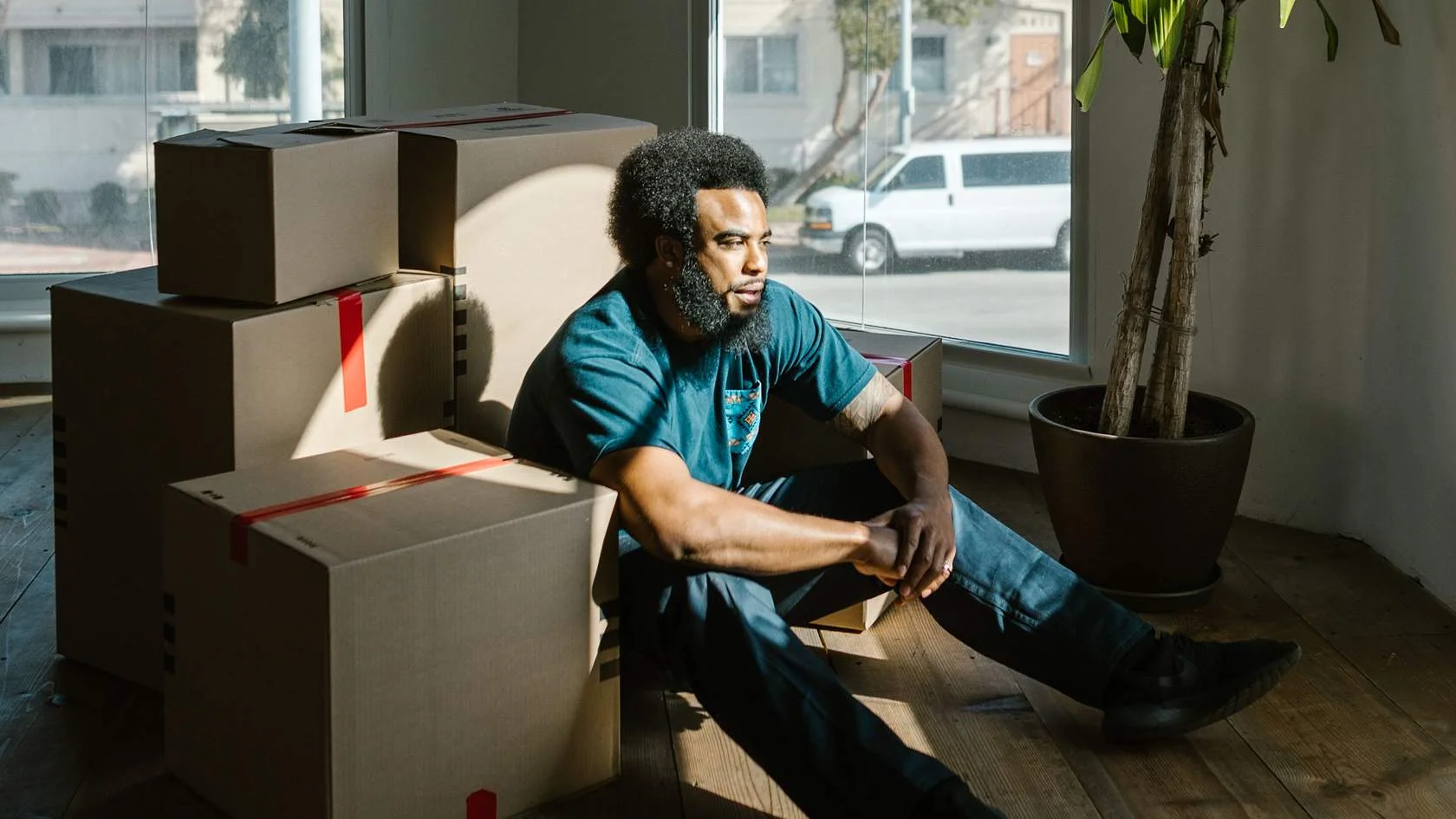
Other changes arrive without warning. A job loss, a separation, a serious illness or a death can turn your plans upside down in a week. So can moving to a new province, where you might have to build your social connections again from nothing.

Some changes look positive from the outside, like a promotion or a new relationship, but still bring stress and doubt. Any significant change to your daily life, roles or identity can be hard, even when it’s good. Life transitions often require you to change more than your plans.

Because every beginning comes with an ending. A joyful event like a new baby can mean losing sleep, freedom and some of your personal identity. A dream job can mean leaving a team you loved.

Many people feel they’re not allowed to struggle with something they asked for, so they keep quiet. Therapy is a place to acknowledge the joy and the loss at the same time, without picking one.

Naming what you miss is not ingratitude. It’s part of adapting to new circumstances and updating your self-perception, and it often makes it easier to embrace the good parts of the change.

One well-known framework is William Bridges’ transition model. It breaks a transition into key phases: an ending, a neutral zone, and a new beginning. The external change can happen in a day, but the inner transition takes longer.

The ending is the process of letting go of old ways. You shed a role, a plan or a picture of how things would go. Then comes the neutral zone, an in-between stretch when the old life is over and the new one hasn’t taken shape. It often brings disorientation. Some people also find it’s when they see most clearly what they care about.

The new beginning comes when the change starts to feel like yours. The phases are non-linear, and you may move back and forth as the change unfolds. Knowing where you are can make the confusion feel less personal.

Counselling gives you room to work through the disruption instead of pushing through on autopilot. Your therapist helps you sort out what you’ve lost, what you’re afraid of, and what you hope for.

There’s a practical side too. Your therapist may share practical tips for sleep, worry and getting back into a routine, or for asking the people around you for help. Most clients build more resilience than they expected, and they navigate the next change with more clarity and confidence.

Down the road, a lot of people use this time to reassess their values and aspirations. Change brings challenges and opportunities. A layoff, a move or a diagnosis can end up as a catalyst for personal growth and positive changes you would never have chosen on purpose.

Yes. Work often shapes our days, social life and professional identity. When it ends, through a layoff or the end of a long career, people can lose their sense of purpose even when the change was expected.

In sessions, you can talk through the shock, the anger and the money worries, and look at what work gave you beyond a paycheque. That makes it easier to find new sources of meaning and structure.

Some clients use counselling while they search for a new job or retrain and learn new skills. Others use it to plan what life after work will actually look like, so the first months feel less empty.

Expect it to take time. Even an exciting move means saying goodbye to friends, family, familiar streets and the version of yourself who lived there. Feeling homesick or lonely is normal.

If you’ve relocated to Ontario from another province or country, you may also be dealing with a new culture, language or job market. A therapist can help you deal with the stress and rebuild a sense of stability.

You’ll work on small, practical steps, like building a routine, finding community and staying connected to people back home, while giving yourself room to mourn what you left.

Absolutely. Health diagnoses, for you or someone you love, can change your plans, your body and how you see the future. It’s common to feel shock, grief or fear long after the first appointments.

Becoming a parent is one of the biggest transitions there is. Alongside the love, many new parents feel overwhelmed, isolated or unsure of themselves, and partners may be adjusting in different ways.

In both cases, counselling offers a compassionate space to adjust to your new normal. Your therapist can also help with significant shifts in family dynamics as everyone around you adapts too.

Yes. Sessions are confidential within the professional and legal limits your therapist will explain at the start. Our team includes registered psychotherapists and registered social workers, regulated by their professional colleges in Ontario.

You can meet in person at our Barrie, Orillia or Newmarket offices, or online by secure video anywhere in Ontario. Online sessions can help when a move, a new baby or a health change makes travel hard.

Sessions last about 50 minutes, with appointments into the evening on weekdays and on Saturday mornings. Book a free matching consultation, and we’ll help you find a therapist who fits.

From our blog

Latest Articles

Articles for

Next step

You don't have to figure out the next chapter alone. Book a free 20-minute matching consultation, and we'll match you with a therapist who understands what you're going through.

Open now — a Matching Specialist can take your call

Phone line closed — leave a message and expect our call the next business day morning

Help us find your match. Our Matching Specialist will be in touch.

Help us find your match. We’ll contact you the next business day.

Call 705-737-3513

Prefer to talk? We’re here to listen

Leave a message after hours

Choose & Book a Therapist

View profiles & book online