Intergenerational Trauma: What It Is, How It’s Passed Down, and How to Heal
Some of what we carry didn’t start with us. Maybe your grandfather never talked about the war. Now you notice that you tense up when the kids get loud in the car, and you’re not sure why.
Counsellors have a name for that: intergenerational trauma, which is what happens when the emotional and psychological effects of trauma carry on into the next generation (through the way kids are parented, the habits a family picks up, and quite possibly through biology too). Something like a war, abuse at home, or having to flee your country can keep rippling through a family for decades. Talking about it isn’t a way of putting your parents or grandparents on trial. It’s more about seeing the pattern well enough that you get to decide which parts you carry forward.
Below, we look at what it means, how it gets passed down from generation to generation, the signs to watch for, and what helps families break the cycle of intergenerational trauma. Read on…
 You’ll talk with Devika Rogersour Matching Specialist
Start with a free 20-minute matching consultation.
Phone line open· closes at 4:30 pm
Phone line closed· opens the next business day at 8:00 am
Help us find your match. Our Matching Specialist will be in touch.
Help us find your match. We’ll contact you the next business day.
View profiles & book online
What Is Intergenerational Trauma?

In simple terms, intergenerational trauma refers to the psychological and emotional effects of trauma (and sometimes physical ones) that are transmitted from one generation to the next. A parent or grandparent lives through something overwhelming, and the ways they learned to cope show up in how the next generation feels, reacts, and relates to others.
You may also see the terms generational trauma, transgenerational trauma, or inherited trauma. They describe roughly the same idea. When a whole community goes through the same traumatic event, such as genocide, slavery, forced relocation, or the residential school system in Canada, researchers often call it historical or collective trauma. Indigenous communities and other marginalized communities have carried this type of trauma for generations.
The original hurt doesn’t need to be headline-level. For one family it might be a single traumatic event, like a dad who died without warning when the kids were small; for another it’s ten years of a parent drinking, bills that never got paid on time, or fights the neighbours could hear through the wall. What these stories have in common is that nobody had the chance (or the help) to work through what happened, so the pain went quiet and kept shaping family dynamics. That unspoken, inherited pain is the core component of intergenerational trauma.
If understanding intergenerational trauma in your own family feels like the next step, individual counselling or trauma counselling can be a good starting point.
How Trauma Is Passed Down Through Generations
Trauma is passed down through families mostly by way of relationships and daily habits, and possibly through biology. Kids learn how to deal with stress and closeness from the adults they depend on, so a parent’s unresolved trauma shapes a child’s world.
Researchers who study intergenerational transmission point to a few main routes from parents to children:
- Parenting and attachment. A parent who is struggling with their own trauma may be emotionally distant, overprotective, or unpredictable. Kids adapt to that, sometimes by becoming anxious, sometimes by shutting down. Older kids often start to make sense of it in teen counselling. Our article on avoidant attachment explains one of these patterns.
- Family rules nobody says out loud. “We don’t talk about that.” “Don’t trust outsiders.” “Never show weakness.” These rules often started as survival strategies.
- Culture and community. When a community loses its language, land, or traditions, families lose some of the things that used to help people recover from hard times. That gap can get handed down too.
- The stress response. Growing up around constant tension can train a child’s nervous system to stay on high alert. We explain how this works in our guide to polyvagal theory.
- Repeated behaviours. Harsh discipline, drinking to cope, or explosive anger can be learned and repeated without anyone deciding to.
There is also early research on biology. A small study of Holocaust survivors and the adult children of Holocaust survivors found changes in a stress-related gene (FKBP5) in both generations, hinting at intergenerational effects on biology too (Yehuda et al., 2016). Animal studies point the same way. In one well-known experiment, mice trained to fear a particular smell had pups and grandpups that were more sensitive to that smell, even though they had never been trained (Dias & Ressler, 2014). This field, called epigenetics, is still young, and the human findings need to be confirmed in larger groups. Still, it supports what many families already feel: trauma can be inherited, and trauma lives in the body as well as in memories.
Examples of Intergenerational Trauma
The big ones are war, residential schools, family violence, addiction, and child abuse.
In Canada, the residential school system has been studied more than almost any other example. Amy Bombay and her colleagues at Carleton University found the damage didn’t end with Survivors. Their kids reported more stress growing up and more mental health struggles as adults, and the risk went up again when parents and grandparents had both attended (Carleton University).
Who Is Affected by Intergenerational and Historical Trauma?
Anyone can be affected by intergenerational trauma. It isn’t limited to one culture or income level. Still, some groups carry more of it because the harm hit whole communities at once. In our work in Ontario, we see it in refugee families uprooted by war or displacement, in families where drinking or drug use shows up across generations, and in adults whose parents were abused as kids and never got help. Some of these families live far from an office, and online counselling makes support easier to reach. It also runs through communities that have faced racism, poverty, or systemic oppression for many years, and through the descendants of Holocaust survivors and other genocides.
Rough childhoods are more common than most of us assume. A Canadian study of over 44,000 adults aged 45 to 85 found that about 62% had lived through at least one adverse childhood experience, like abuse or a parent with mental illness (McMaster University). Plenty of those people are parents and grandparents today.
No waitlists. In-person in Barrie, Orillia, Newmarket, or online across Ontario.
Phone line open· closes at 4:30 pm
Phone line closed· opens the next business day at 8:00 am
Help us find your match. Our Matching Specialist will be in touch.
Help us find your match. We’ll contact you the next business day.
View profiles & book online
Signs and Effects of Intergenerational Trauma

Symptoms of intergenerational trauma often show up as anxiety, a kind of emotional numbness, trouble trusting people, a big startle reaction to small noises, or (the one people tell us stings the most) catching yourself doing exactly what you promised you’d never do as a parent. Most people don’t connect any of that to their family’s history until somebody, often a counsellor, helps them see it.
You might notice:
- Feeling on edge without a clear reason. Your body reacts to everyday stress as if something terrible is about to happen.
- Difficulty with feelings. Emotions either feel overwhelming or seem to switch off, which makes emotional regulation hard. This is often where emotion regulation support helps.
- Trust and closeness issues. Letting people in feels risky, or you cling tightly to relationships out of fear of losing them.
- Low self-worth or shame. A sense that something is wrong with you, even when you can’t say what.
- Parenting struggles. You hear your parent’s words come out of your mouth, or you go to the opposite extreme.
- Trauma responses. Nightmares, hypervigilance, or reactions similar to post-traumatic stress disorder (PTSD). Our article on CPTSD symptoms shows what long-term trauma can look like.
How It Affects Parenting, Attachment, and Family Communication
Intergenerational trauma affects parenting in quiet ways. Parents who grew up feeling unsafe can find it really tough to stay steady with their own children, no matter how much they love them. Some go back and forth between warm and distant without meaning to, which leaves a child never quite sure whether comfort is coming this time. Growing up like that can lead to an anxious or avoidant attachment style that a person later brings into their own adult relationships.
Communication suffers too, and one child often ends up looking after a parent’s feelings. If that rings true, our parent counselling can give you practical tools without any judgment.
Links to Anxiety, Depression, PTSD, and Addiction
The long-term impacts of trauma in a family raise the risk of several mental health problems, though it doesn’t make any of them certain. In the Carleton research mentioned above, children of residential school Survivors reported more depressive symptoms than people whose parents did not attend. Anxiety, PTSD symptoms, and substance use also tend to cluster in families with a long history of trauma. Alcohol or drugs often start as a way to numb feelings nobody taught you how to handle, and then become one more thing the next generation inherits.
How to Break the Cycle of Trauma
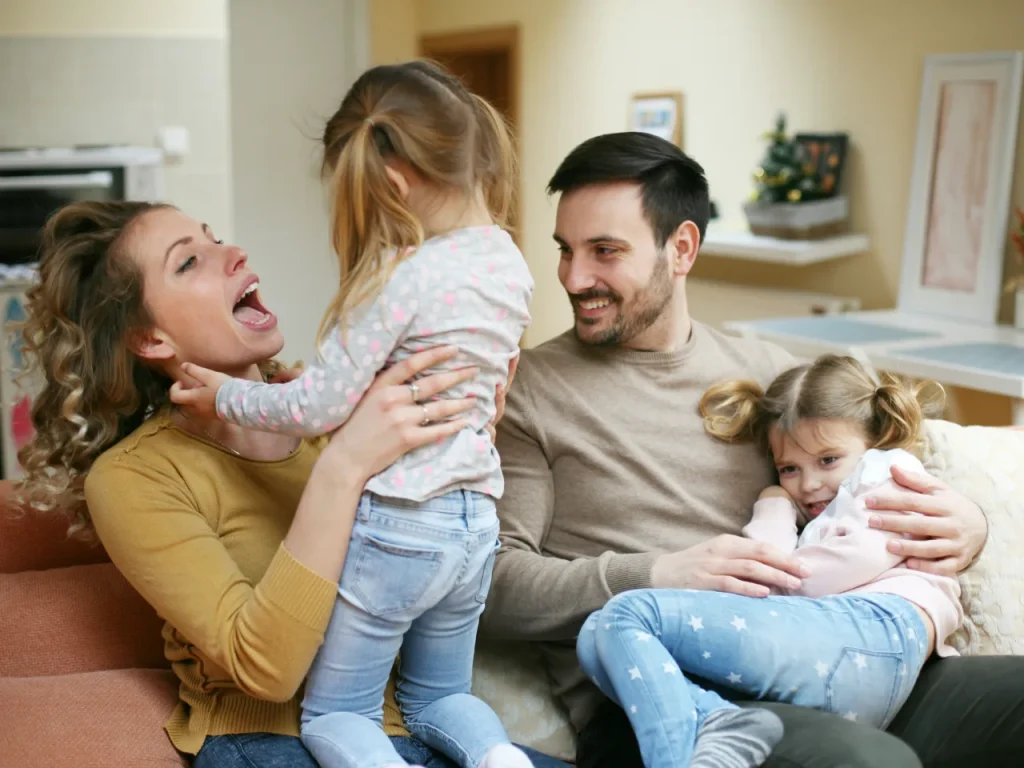
Breaking the cycle starts with noticing the patterns, understanding where they came from, and slowly practising new ways of responding. You don’t have to fix everything at once, and you don’t have to do it alone.
A few things that help:
- Name the pattern. Just saying out loud “this is something my family has carried” can take some of the shame out of it.
- Learn your family’s story. If it’s safe to, ask an aunt or grandparent what their life was like. Knowing the backstory tends to turn blame into understanding.
- Calm your body first. Breathing, movement, time outdoors, and enough sleep help a stressed nervous system settle, which makes new choices possible.
- Set healthy boundaries. Breaking the cycle sometimes means limiting contact with people who keep causing harm. Our guide to dealing with toxic family members may help.
- Parent with repair in mind. No parent gets it right every time. What protects kids is coming back after a hard moment, apologizing, and reconnecting. Ideas for building resilience in children can support this.
- Reconnect with culture and community. For many families, especially Indigenous and immigrant families, language, traditions, and community ties are a powerful part of healing.
How Parents Can Avoid Passing Trauma On
You don’t need to have had a perfect childhood to raise a secure kid. Mostly it comes down to working on your own reactions and staying connected:
- Notice your triggers. If bedtime battles make you see red, ask what that moment reminds you of.
- Before you discipline, breathe. Ten seconds won’t fix everything, but it’s often enough to stop you from saying the thing your dad used to say.
- Name feelings out loud at home, including yours (“I’m frustrated, so I’m going to take a minute”).
- When you do lose your temper (and you will), go back and repair it. A simple “I’m sorry I yelled, that wasn’t okay” teaches kids more than never slipping would.
- Get support for yourself. Healing your own trauma is one of the best things you can do for your children. If they are struggling too, child counselling can help.
Some weeks you’ll handle a meltdown better than your parents ever did, and some weeks you won’t. That’s normal.
Addressing Intergenerational Trauma in Therapy
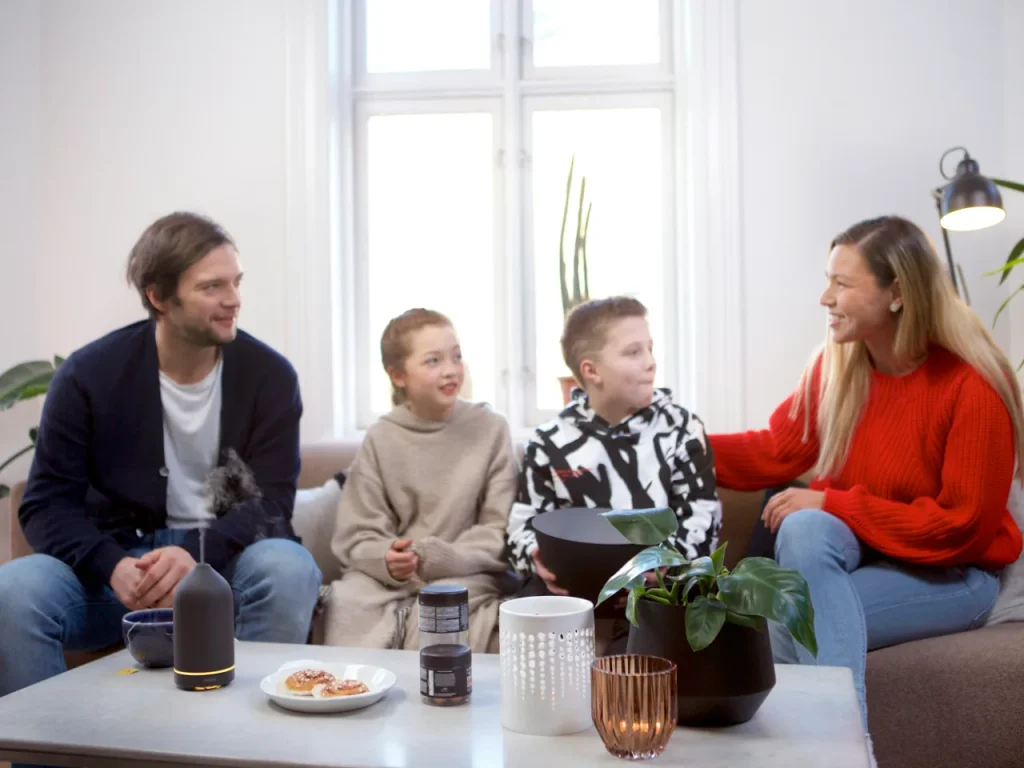
Therapy gives you a safe spot to make sense of your family’s history and the aspects of intergenerational trauma you’re carrying, feel the painful stuff, and try out new ways of reacting with someone in your corner. A therapist who offers trauma-informed care goes at your pace and puts safety first. Trauma therapy may also look at family systems, which just means how each person’s role in the family keeps the old patterns running.
At Family TLC, our therapists work with individuals, couples, and whole families. In family therapy, relatives can talk about hard topics with a neutral person guiding the conversation, so old patterns don’t take over. We offer family counselling in Barrie and in Newmarket, as well as sessions by secure video across Ontario. Kids and teens can also have their own sessions.
If you are a Survivor of residential schools or a family member, free 24/7 support is available through the National Indian Residential School Crisis Line at 1-866-925-4419 and the Hope for Wellness Help Line at 1-855-242-3310 (Indigenous Services Canada). If you are in crisis or thinking about suicide, call or text 9-8-8 any time, or call 911 in an emergency.
Final Thoughts
None of this is anyone’s fault. It is what happens when pain goes unprocessed and gets passed along the only way it can, through the people we love and learn from.
The patterns that reached you don’t have to continue. Healing is possible. With understanding, support, and patience, it becomes a healing journey that protects your emotional health and builds healing and resilience for future generations.
If you’re ready to start that work, we’re here to help. Book a free 20-minute matching consultation, and our Matching Specialist will connect you with a therapist who fits your needs. Contact Family TLC to get started.
Frequently Asked Questions
What is the difference between generational and intergenerational trauma?
Honestly, most people (therapists included) use the two terms interchangeably, although a few researchers like to draw a line between them.
- Everyday use: When someone says either one, they usually just mean trauma whose effects have rippled through their family.
- Intergenerational: Researchers often save this word for what passes from a parent to a child.
- Transgenerational: You’ll see this one when the effects reach grandchildren or great-grandchildren.
- Historical trauma: This is used when a whole people went through it, like the residential school system.
- In practice: A good therapist cares more about your story than about which label fits it.
Can trauma really be passed down through genes?
Maybe, in a limited way. Early research suggests trauma can change how some genes switch on and off, but the science is still young.
- Epigenetics: Scientists are looking at changes in gene activity, not changes to the DNA code itself.
- Small studies: The best-known Holocaust study had only 32 survivors, so bigger studies are still needed.
- Family environment: How kids are raised has a much stronger and better-proven effect.
- Both together: Biology and home life probably feed into each other.
- Good news: Safe, steady relationships can calm a stress system that has been on high alert.
What are the signs of generational trauma in a family?
Usually it’s a pattern that keeps repeating, not one obvious problem.
- Secrets: Ask about a certain uncle, or the old country, and the room goes quiet.
- Repeated struggles: We often see the same problem, like drinking or a hot temper, in a grandparent, a parent, and then the person sitting in front of us.
- Emotional distance: Love was shown through hard work and a full fridge, but hugs and kind words were hard to come by.
- High anxiety: Someone is always waiting for the other shoe to drop.
- Harsh parenting: Strict, fear-based discipline gets handed down because “that’s how I was raised.”
How long does it take to heal from inherited trauma?
There’s no set timeline. For most people it happens in stages, and some stages take longer than others.
- Awareness: Seeing the pattern clearly for the first time can bring real relief.
- Safety: Next comes feeling steadier in your body and in your closest relationships.
- Processing: Working through painful memories can take months, and it goes better with support.
- New patterns: Every time you respond differently, the new way gets a little easier.
- Ongoing growth: Many people keep noticing changes for years after their last session.
Can family therapy help break the cycle of inherited trauma?
Yes, it can. It gives relatives somewhere to understand each other and change old habits together, with someone neutral in the room.
- Shared understanding: Hearing why a parent was the way they were (sometimes for the very first time) can soften years of blame.
- Safer conversations: When a talk starts turning into the usual fight, the therapist helps everyone slow down and actually hear each other.
- New skills: You practise listening and apologizing in the room, so it feels less awkward when you try it at home.
- Who comes: We can start with whoever is willing to come, even if the rest of the family isn’t ready yet.
- Mixing formats: Some people also book individual sessions to work on their own history alongside the family work.
Take the next step in whichever way suits you best.
Phone line open· closes at 4:30 pm
Phone line closed· opens the next business day at 8:00 am
Help us find your match. Our Matching Specialist will be in touch.
Help us find your match. We’ll contact you the next business day.
View profiles & book online