

Avoidant Attachment Style in Relationships: What It Looks Like and What Helps
It’s possible to love someone a lot and still want to bolt when things get close. Maybe it hits after a really good weekend together and you catch yourself craving a few days alone. Or maybe you’re the one left wondering why your partner seems to retreat every time the two of you get closer.
When we hear stories like these in our Barrie and Newmarket offices, an avoidant attachment style is often part of the picture. That’s not a judgment about anyone’s character. Most people who keep their distance learned to do it as kids because it worked for them back then, and the habit simply never got updated.
Below we walk through what this attachment style looks like in a relationship, where it tends to come from, and what each partner can do to make closeness feel less risky. We’ll also talk about how couples counselling fits in. Read on…
 You’ll talk with Devika Rogersour Matching Specialist
Start with a free 20-minute matching consultation.
Phone line open· closes at 4:30 pm
Phone line closed· opens the next business day at 8:00 am
Help us find your match. Our Matching Specialist will be in touch.
Help us find your match. We’ll contact you the next business day.
View profiles & book online
What Is an Avoidant Attachment Style?

An avoidant attachment style is a way of handling intimacy by keeping some emotional distance and leaning mainly on yourself. People with this pattern usually do want a loving relationship. Getting close just feels risky to them, so they guard their independence and tend to downplay their own emotional needs.
The idea comes from attachment theory, which John Bowlby and Mary Ainsworth developed by watching how one-year-olds in a “Strange Situation” reacted when a parent left the room and came back. In 1987, Cindy Hazan and Phillip Shaver found similar patterns in adult love: about a quarter of the adults they surveyed fit an avoidant pattern, while 56% fit a secure attachment style (Hazan & Shaver, 1987).
The Four Attachment Styles
Most therapists describe four attachment styles, and the last three are known as insecure attachment styles:
- Secure: Comfortable with closeness and with time apart, and able to ask for support.
- Anxious: Worries a lot about abandonment and often seeks reassurance.
- Avoidant: Values independence and self-reliance and pulls back when things get intense.
- Disorganized: Sometimes called the fourth attachment style, it mixes a wish for closeness with fear of it.
Researchers also score adults on two scales, attachment anxiety and attachment avoidance. Someone high on avoidance tends to get uneasy when partners often seek reassurance, would rather talk about weekend plans than feelings, and settles down by being alone instead of being comforted.
Attachment styles describe habits, not diagnoses, and most of us show a blend. You can feel securely attached with your best friend and still be guarded with a partner. If you’d like to start understanding your attachment style better, individual counselling is a good first step.
Signs of Avoidant Attachment in Relationships

The most common sign of avoidant attachment in relationships is pulling back as closeness grows. A partner may change the subject, suddenly get busy with work, or go quiet right when the other person reaches out. In our experience, this distance almost never means they don’t care. Usually they feel flooded and need to catch their breath.
Here are the relationship patterns couples describe to us most often:
- Pulling away after good moments. A great date night is followed by fewer texts and longer hours at the office.
- Discomfort with emotional talks. A question like “How do you feel about us?” gets a joke or a one-word answer. Many people with this attachment style genuinely struggle to express what’s going on inside.
- A strong need for space. Alone time feels essential, so a request for more time together can land as pressure.
- Zeroing in on a partner’s flaws. Little annoyances get bigger as the relationship gets more serious, which gives a reason to keep one foot out the door.
- Keeping things separate. They might have a friend group you’ve never really met, or they dodge talks about a shared budget or where you’ll live in five years.
- Going silent during conflict. Instead of arguing back, they leave the room or go blank. If that keeps happening for months, it can slide into functional freeze or a quiet drift apart.
Researchers Mario Mikulincer and Phillip Shaver call these moves “deactivating strategies,” meaning ways of turning attachment needs down so they hurt less (Mikulincer, Shaver & Pereg, 2003). Put simply, people with avoidant attachment styles learn to suppress their needs and emotions, but the feelings are still there.
People sometimes mix this up with being an emotionally unavailable partner. There’s overlap, but avoidant attachment is specifically about a fear of depending on someone. Plenty of avoidants are loyal and caring, and they show love by doing things for you rather than talking about it. They want a relationship as much as anyone. They just need it to feel safe first.
Avoidant Attachment vs Avoidant Personality Disorder
Avoidant attachment and avoidant personality disorder are two different things. Avoidant personality disorder is a mental health diagnosis that involves an intense fear of rejection, strong feelings of inadequacy, and avoiding social contact across many parts of life, not just romance (StatPearls). An avoidant attachment style is a relationship pattern, and plenty of people with it have full social lives and busy careers. If your worries go beyond your love life, a therapist can help you figure out what’s really going on.
Where Avoidant Attachment Comes From

Avoidant attachment usually starts with childhood experiences in which showing a need didn’t lead to comfort. When a child who reaches out is met with distance, impatience, or a quick “you’re fine,” that child learns to need less and deal with feelings on their own.
To be clear, most of these parents loved their kids. Many were worn out, some were raised exactly the same way, and some truly thought a tough, independent child was a well-prepared one. Here’s what we often hear about in sessions:
- A dad who never missed a hockey game but changed the subject whenever someone cried
- Relatives and teachers saying “you’re such an easy kid”
- Arguments that ended with a closed door and nobody talking until the weekend
- Making lunches for a younger brother at age nine
If asking for help doesn’t work, kids stop asking, and that lesson can follow them into every relationship they get into as adults. Secure attachment develops when a caregiver responds warmly most of the time, not perfectly. If old family dynamics still weigh on you, our family counselling and trauma counselling can help you look at these attachment issues at a pace that feels safe. Parents hoping to raise securely attached kids can get support through parent counselling too.
It isn’t only childhood, either. A bad breakup or finding out a partner cheated can make anybody warier the next time they meet someone new, so attachment can keep shifting well into adulthood.
No waitlists. In-person in Barrie, Orillia, Newmarket, or online across Ontario.
Phone line open· closes at 4:30 pm
Phone line closed· opens the next business day at 8:00 am
Help us find your match. Our Matching Specialist will be in touch.
Help us find your match. We’ll contact you the next business day.
View profiles & book online
Dismissive-Avoidant vs Fearful-Avoidant Attachment
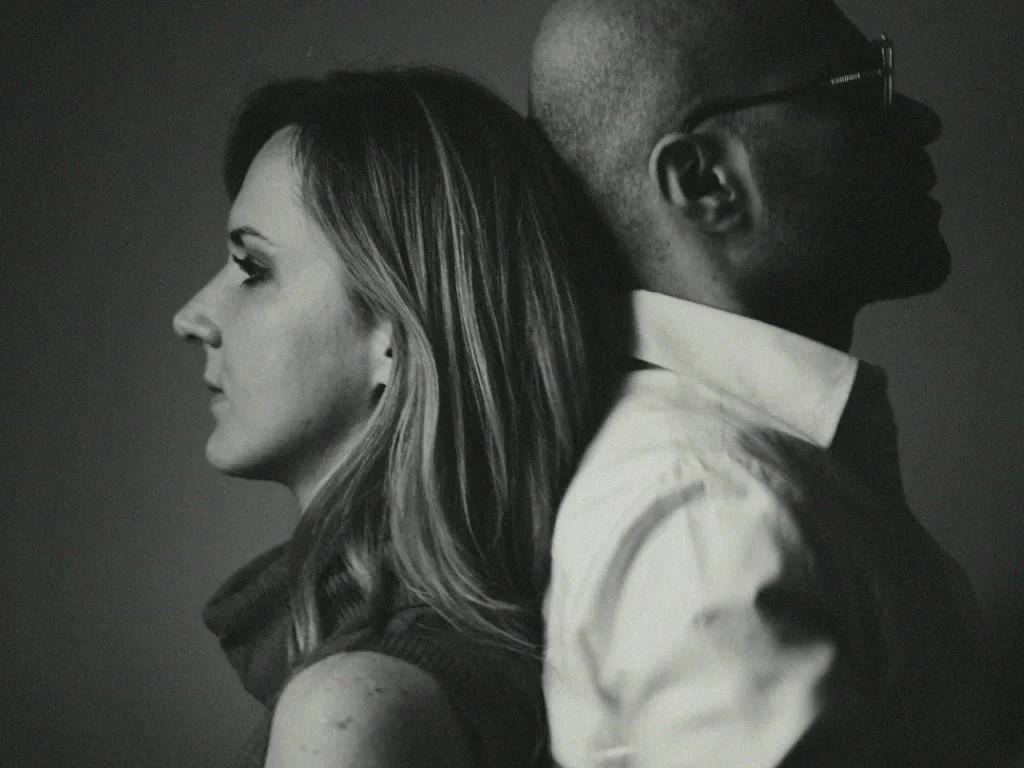
There are two forms of this attachment style. A person with dismissive-avoidant attachment keeps distance and feels fairly content alone, while someone with fearful-avoidant attachment has a real need for closeness but also fears it, so they swing between reaching out and pulling away.
Psychologists Kim Bartholomew and Leonard Horowitz described this split in 1991, based on how people see themselves and others (Bartholomew & Horowitz, 1991).
- Dismissive: Sees self positively and others as less dependable. Tends to downplay relationships and may say they “don’t really need anyone.”
- Fearful: Sees both self and others as unreliable. Craves connection but expects to get hurt, which leads to a push-pull cycle. This style overlaps with the disorganized attachment style.
A very common pairing is an anxious and avoidant couple, sometimes called the anxious-avoidant trap. One partner needs reassurance to feel safe, the other needs space to feel safe, and each person’s way of coping sets off the other’s fear. The more the partner with an anxious attachment style chases, the more the other one retreats, and both end up lonely in the relationship. We cover that cycle in our guide to anxious-avoidant attachment. Anxious partners often live with a fear of losing someone, which makes the distance feel even more painful.
Loving a Partner With an Avoidant Attachment Style

What usually works is a calm, steady presence. Tell your partner what you’d like in a sentence or two and then let it sit. People with this attachment style tend to move toward you once the pressure is off.
Why Avoidant Partners Withdraw or Resist Commitment
As a relationship gets more serious, a person with this attachment style can start to feel boxed in, even when they’re happy. Moving in together, meeting the family, or talking about marriage can stir up an old belief that relying on someone ends in disappointment. Pulling back gives them breathing room. In most cases it says more about their history than about how they feel about you.
How to Build a Healthy Relationship With an Avoidant Partner
Whether you’re dating someone with avoidant tendencies or working on attachment in marriage, these habits help a relationship more than you might expect:
- Treat space as normal. If your partner wants a night to themselves, agree on when you’ll reconnect, for example, “Take tonight, and let’s grab breakfast tomorrow.” A plan feels very different from a silent evening.
- Make small, concrete requests. “Text me when you land” is much easier to say yes to than “I need you to be more present.”
- Notice how they show care. Clearing the snow off your car before you leave on a January morning might be their version of “I love you.”
- Let a shutdown cool off. Following someone from room to room usually pushes them further away, so give it an hour and come back to it.
If you’re the one who tends to pull away, small steps help you feel more comfortable with closeness. Try naming one feeling out loud each day, or say, “I need a break, and I’ll come back to this at 8,” and then actually come back. Old communication patterns change with practice, and that’s what our communication therapy focuses on. Learning to sit with uncomfortable feelings is also a big part of emotion regulation work. It’s worth starting early, because years of distance can harden into contempt in the relationship, and that’s much harder to undo.
Will an Avoidant Partner Come Back After Pulling Away?
Often they do, especially after a stretch of distance rather than a clear breakup. Signs they may be finding their way back include short, low-pressure messages, asking how your week went, bringing up a shared memory, or suggesting a casual plan like a coffee. A warm, easygoing reply usually works better than a long talk about the relationship. If the same cycle keeps repeating, it’s worth looking at it together with a counsellor instead of just waiting it out.
Healing an Avoidant Attachment Style: How Therapy Can Help

Yes, this attachment style may change. Attachment patterns are fairly stable, but safe relationships and focused therapy help many people move toward what researchers call “earned security,” the same path people take going from anxious to secure.
A large study that followed adults over time found that attachment styles do shift after life events, although many changes are small or temporary (Fraley, Gillath & Deboeck, 2021). In therapy, the change can be more lasting. A Canadian study found that couples in emotionally focused couple therapy showed lower attachment avoidance with their partner after treatment (Burgess Moser et al., 2016).
In couples counselling, a therapist helps both partners:
- See the pursue-withdraw cycle as the problem, rather than each other
- Understand the fears that sit under the distance and the chasing
- Practise new ways to ask for and offer support
- Build trust through small, repeated moments of safety in the relationship
Our therapists use attachment-based therapy along with tools from the Gottman Method, tailored to each couple. We offer couples counselling in Barrie and in Newmarket, plus online couples counselling across Ontario. Research on whether couples therapy works is encouraging, especially when both partners take part.
Final Thoughts
An avoidant attachment style is a way of staying safe that someone learned for good reasons. In an adult relationship, though, it can leave both people feeling lonely even when the love between them is real.
Plenty of the couples we work with get through this. The partner who used to retreat slowly learns that intimacy doesn’t swallow up their independence. Their partner, meanwhile, stops reading every request for space as a rejection. Healing attachment wounds takes a while, and it is very doable.
If this article sounds like you or your relationship, you don’t have to figure it out on your own. Book a free 20-minute matching consultation, and our Matching Specialist will connect you with a therapist who fits your needs. Contact Family TLC today to get started.
Frequently Asked Questions
What is the main cause of avoidant attachment?
In most cases, avoidant attachment goes back to early years when emotional needs weren’t met with comfort.
- Distant caregiving: The parents took care of practical needs but felt awkward around tears and fear.
- Early independence: The child got praised for never needing help.
- Quiet homes: Nobody in the family really talked about feelings or conflict.
- Adult hurt: A painful breakup or betrayal later on can make the pattern stronger.
- Family history: Parents often pass down the same style they grew up with.
Do avoidant partners feel love?
They do, though they often show it in quieter ways than their partner expects.
- Acts of service: They may show love by fixing the leaky tap or picking you up from work.
- Loyalty: Lots of them are the type who stay married for forty years.
- Hidden feelings: They may look calm during a hard moment while their heart is racing.
- Need for space: A quiet hour in the garage or on a run helps them come back ready to connect.
- Growth: With a partner who doesn’t push, they often get more open as the years go by.
Can two avoidant people have a healthy relationship?
Two partners with this style can build something stable, but they’ll need to make room for intimacy on purpose.
- Comfort with space: Neither person feels smothered, so things may feel easy early on.
- Risk of drifting: Without effort, the couple can slide into living parallel lives.
- Unspoken issues: Problems tend to pile up because nobody wants to bring them up.
- Planned connection: Weekly check-ins and small shared rituals make a real difference.
- Outside support: A counsellor can give both people a safe place to practise opening up.
How do I know if I have an avoidant attachment style?
You might lean this way if getting close to someone often feels uncomfortable, even when you care about them.
- Need for distance: You tend to pull back when a relationship starts getting serious.
- Self-reliance: Asking anyone for help feels hard or even pointless.
- Emotional talks: Conversations about feelings make you want to change the subject.
- Relief alone: After a hard day, you’d rather be alone than be comforted.
- Pattern over time: Looking back, the same thing has happened with more than one partner.
How long does it take to change this attachment style?
There’s no set timeline, since it depends on the person, the relationship, and the support around them.
- Early shifts: Some people notice small changes within a few months of therapy.
- Steady practice: New habits need to be repeated in everyday life before they stick.
- Safe relationships: A patient partner or close friend can speed things up.
- Setbacks: Stressful periods may bring the old patterns back for a while, and that’s normal.
- Lasting change: Many people build “earned security” over a year or more.
Take the next step in whichever way suits you best.
Phone line open· closes at 4:30 pm
Phone line closed· opens the next business day at 8:00 am
Help us find your match. Our Matching Specialist will be in touch.
Help us find your match. We’ll contact you the next business day.
View profiles & book online