

What Is the Anger Iceberg? Understanding the Hidden Emotions Beneath Anger for Better Emotional Control
Have you ever felt angry and couldn’t really figure out what triggered it in the first place? Beneath everyone’s anger lie underlying emotions, and what we show on the outside when we express anger is often just the visible tip of the iceberg. The anger iceberg concept, developed by John and Julie Gottman, helps make sense of what’s really going on when you feel angry.
Anger is just a secondary emotion, which means there are usually underlying feelings or deeper emotions hiding beneath the surface of anger. Like an iceberg, it represents how emotions and feelings sit underneath what we show, even when we think we’re just “mad.” It’s a simple way to remember that anger may be pointing to something more than what we first notice.
Understanding the anger iceberg can help build emotional intelligence and give you a better way to understand and manage your emotions. Read on to explore what might really be going on behind your anger, the root causes of those moments when you feel extra mad, and how to manage your anger triggers more effectively.
Contact us today through our online form or call (705) 737-3513 for expert counselling and therapy in Barrie, Orillia, Newmarket, and online across Ontario.
Book a Free Matching ConsultationWhat Is the Anger Iceberg Theory
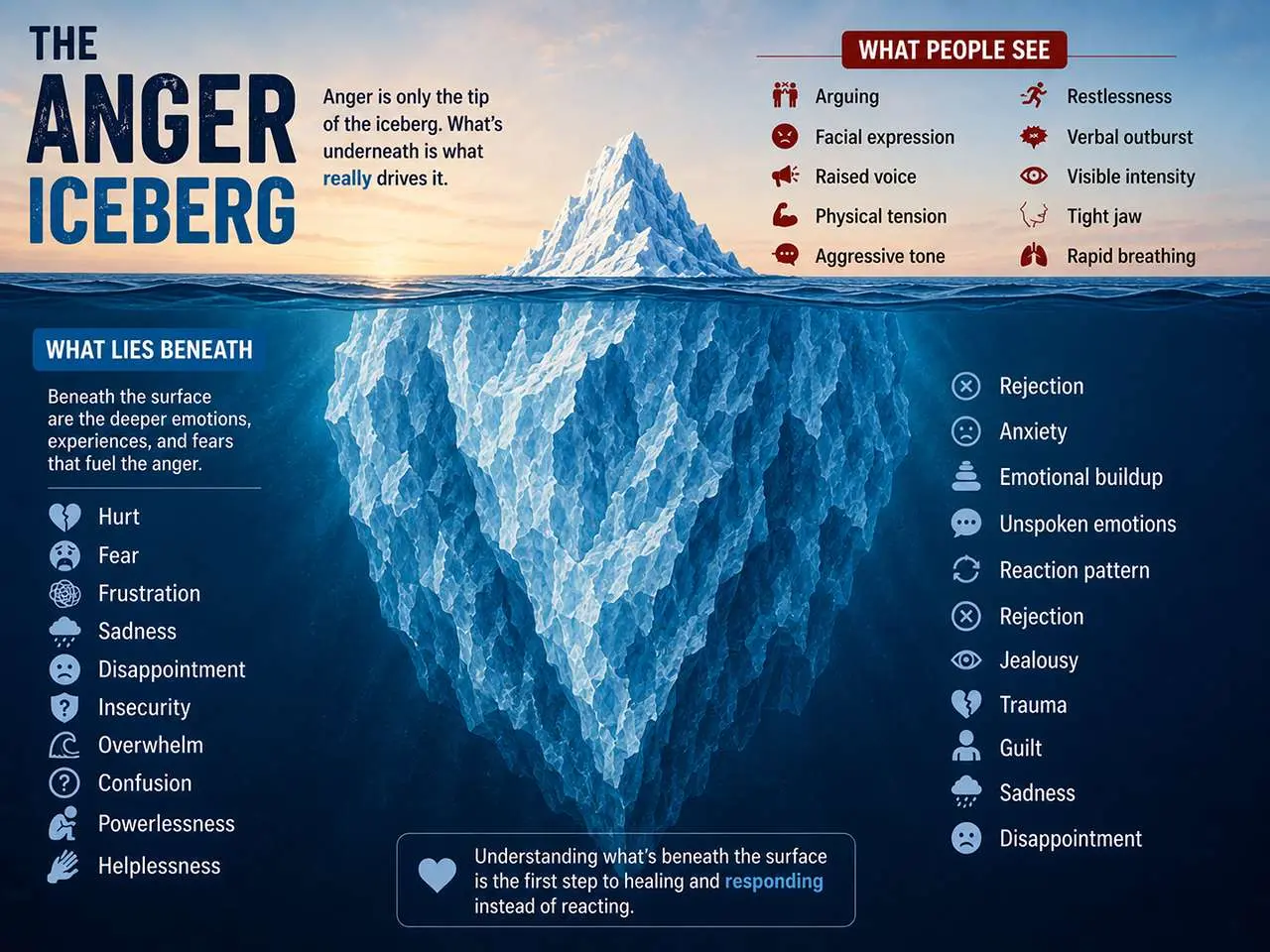
The anger iceberg is a metaphor that helps explain what’s truly happening within you when you’re feeling angry. It shows that anger is just the visible part of a much bigger and deeper emotional struggle. The idea that anger tends to show up first, quickly, while other emotions remain unseen, helps explain why reactions can feel intense, sharp, heavy, and hard to process.
A Simple Way To Frame Anger
Anger can be better understood more humanly by recognizing that what shows on the surface is not always the full story inside, where anger often masks a deeper primary emotion underneath.
- Anger is often the most visible response when emotions start building in a moment.
- It is only the surface part of a deeper emotional experience that is not always obvious right away.
- The emotions hidden beneath anger are not always easy to notice or name when things feel intense.
- Anger can show up before there is full clarity about what is actually going on underneath.
The Tip Of The Anger Iceberg
At the tip of the iceberg, it usually shows what anger can look like on the surface, the kind of signs people often notice in themselves or others during tense moments.
- Facial expression or tension: Tightened facial muscles or expressions that show pressure and stress building up without words.
- Raised or loud voice: Speaking louder or sharper than normal, usually when emotions start to feel overwhelming.
- Physical tension: Clenched hands, stiff posture, or a body that feels like it is holding everything in.
- Aggressive tone: A harsher way of speaking that can come out when emotions feel too strong to hold back.
- Restlessness: Pacing, shifting, or not being able to sit still when emotions are running high.
- Verbal outburst: A sudden release of strong emotions expressed through words that come out quickly or in a heated way.
- Visible intensity: Clear, noticeable signs that emotions have reached a peak and are hard to ignore in the moment.
- Tight jaw: Jaw muscles lock up without realizing it when frustration or pressure is rising.
- Rapid breathing: Breathing that speeds up or feels heavier when emotions start building.
Beneath The Surface of Anger Iceberg
The bottom of the iceberg reflects what often sits quietly underneath your anger; the kind of feelings that are not always easy to notice right away but still influence how your reactions happen, revealing what’s beneath the surface.
- Hurt: Emotional pain that often remains unspoken but still shows up through anger.
- Fear: A sense of worry or uncertainty that quietly builds under stressful situations.
- Frustration: That stuck feeling when things do not go the way they are supposed to.
- Sadness: A heavier emotional feeling that sometimes gets covered by anger instead of being expressed directly.
- Disappointment: That sinking feeling when expectations are not met, even if it is not talked about.
- Insecurity: Quiet self-doubt and struggles with self-esteem that can influence how situations are emotionally understood.
- Overwhelm: That moment when everything feels like too much to take in and process all at once.
- Confusion: When nothing feels clear, and emotions start mixing together in a hard-to-sort way.
- Powerlessness: That frustrating feeling of not being able to change what is happening.
- Helplessness: That feeling of not knowing what to do next, even when something needs to be done.
- Rejection: The emotional sting of feeling unwanted or not included.
- Anxiety: That constant inner tension that makes reactions feel heavier than expected.
- Emotional buildup: when feelings have been accumulating for some time and eventually overflow all at once.
- Unspoken emotions: things felt deeply but never put into words or expressed out loud.
- Reaction pattern: The way emotions tend to repeat when they are not fully understood or addressed.
Why Understanding Beneath the Surface of Anger Matters

Sometimes you feel angry, and it just doesn’t fully make sense in the moment. When you start to gain insight into your anger, you begin to notice that anger is a secondary emotion, and there’s usually something else going on underneath it. The anger iceberg helps you understand that what you see on the surface isn’t the full story of your experience of anger.
Why Deeper Awareness Matters
When you seek to understand what’s beneath the anger instead of reacting right away, things often start to make more sense.
- Anger is a natural response, but emotions like stress, fear, or hurt may sit underneath it.
- The bottom of the iceberg is hidden, so what shows on the outside doesn’t always explain what’s really going on.
- The experience of anger can come with an increased heart rate or feeling physically tense.
- The root causes of anger are not always obvious at first.
- Identifying your triggers can help you understand what leads to anger in certain situations.
- Naming the feelings underneath helps you recognize what you’re actually dealing with.
- Recognizing anger as just the surface helps you understand yourself better.
- It helps you gain insight into patterns in how you react.
- Emotions may feel mixed or complicated underneath what you show.
- Empathy can help you look at your reactions with more understanding.
- This kind of awareness supports a more constructive way of dealing with anger.
- It also helps you find healthier ways to express what you’re feeling.
How to Spot Underlying Emotions When You Feel Angry

When feelings of anger hit, it can really help to slow things down for a second and ask yourself what’s actually going on underneath. When you explore the anger iceberg, it often helps us understand that anger can also be a sign that something deeper is happening inside. Most of the time, it’s not just about what happened in the moment, but what it’s connected to underneath.
Noticing Physical and Emotional Clues
Sometimes your body reacts before you even have the words for it, and those little signals can tell you a lot.
- Tight muscles or that tense feeling in your body when anger starts building.
- A racing heart or breathing that suddenly feels different.
- That uncomfortable knot or pressure in your stomach.
- A quick emotional shift that feels hard to explain right away.
- Not being able to clearly say what triggered the reaction.
- Feeling like the emotion is stronger than what actually happened.
- Reacting fast before you’ve really had time to think.
- Struggling to pause even when you know you probably should.
- Feeling overwhelmed without fully understanding why.
Questions That Help You Understand What’s Really Going On
When things calm down a bit, it can help to gently check in with yourself instead of just brushing it off.
- What exactly happened, and what part of it hit me the hardest?
- Did I feel hurt, ignored, or dismissed in that moment?
- Is there stress, fear, or pressure sitting underneath this reaction?
- Do I feel misunderstood or like I wasn’t really heard?
- Is there frustration, unfairness, or injustice I’m reacting to?
- Am I struggling to name what I’m actually feeling?
- Could something else be showing up as anger?
- What might this reaction be trying to tell me underneath it all?
Contact us today through our online form or call (705) 737-3513 for expert counselling and therapy in Barrie, Orillia, Newmarket, and online across Ontario.
Book a Free Matching ConsultationHow the Anger Iceberg Helps Improve Emotional Awareness and Relationships

Sometimes anger shows up so fast that it leads to quick reactions before there’s time to understand what’s really happening underneath. The anger iceberg is a helpful way to slow things down and see that there’s more happening below the surface. When you start recognizing and addressing what’s really going on, it becomes lighter and easier to understand your reactions and handle them better.
How Awareness Supports Better Reactions and Communication
When you start noticing what’s behind your anger, it can actually change how you respond and talk to people in a really practical way.
- It helps you address the root causes instead of just reacting to the moment.
- It makes it easier to notice what’s actually triggering your anger.
- It can help you control your anger when things feel overwhelming.
- It improves communication skills when emotions are involved in a conversation.
- It helps you understand the purpose of anger instead of just seeing it as something negative.
- It gives you space to use healthier coping strategies when things get intense.
- It helps you understand people better during emotional situations.
- It can support you in managing your symptoms when stress builds up.
- It encourages a calmer, more thoughtful way of responding.
- It becomes part of your mental health journey as you learn to better understand yourself over time.
How to Use the Anger Iceberg When Experiencing Anger

When anger hits in the moment, it can feel really fast and hard to control. The anger iceberg is just a way to remind yourself that what you’re reacting to on the surface might not be the whole story. It gives you a bit of space to understand what’s actually driving the reaction.
Taking a Moment Before Reacting
When things feel heavy and heated, it really helps to slow down a little before doing anything else.
- Step away if you can.
- Take a few slow breaths.
- Wait before you respond.
- Let your body settle first.
- Don’t react while it feels intense.
- Give yourself a short pause.
- Let the moment pass a bit.
Noticing What the Anger Looked Like on the Surface
This is just about noticing what the anger actually looked like when it came out.
- Raised voice or sharp tone.
- Tight jaw or clenched fists.
- Walking away from the situation.
- Slamming things or sudden moves.
- Feeling visibly irritated.
- Struggling to stay calm.
- Reacting really quickly.
Looking for What Might Be Beneath It
Once things calm down a bit, it helps to check in with yourself and see what might be underneath the anger.
- Feeling scared or worried.
- Feeling hurt in some way.
- Feeling embarrassed or uncomfortable.
- Feeling overwhelmed or tired.
- Feeling left out or not valued.
- Feeling frustrated about something not working out.
- Feeling pressure building up over time.
- Feeling a mix of emotions that’s hard to name.
Connecting the Feeling to a Clearer Response
When you understand what’s really behind it, your response usually makes more sense too.
- Notice what you were really feeling.
- Separate anger from the deeper emotion.
- See what actually needs attention.
- Respond to the real feeling, not just the reaction.
- Say it more clearly when you talk about it.
- Focus on what caused it.
- Avoid repeating the same reaction next time.
Practical Anger Management Tips Without Losing Control

When anger builds up, it can really feel like it takes over in the moment and controls you, and it’s easy to react before you’ve had time to think. Most of the time, the goal is just to slow things down a bit so you don’t end up saying or doing something you regret later. A few small pauses can actually make a big difference in how the whole situation plays out.
Simple Ways to Stay Grounded When Anger Rises
These are little things you can try right when you feel things starting to rise.
- Pause before reacting so you don’t jump into action too fast.
- Take slow breaths to help your body calm down a bit.
- Step away if needed so you can clear your head.
- Relax your body, especially your shoulders and jaw.
- Wait a few seconds before you respond or speak.
- Notice your tension so you catch what your body is doing.
- Let the intensity pass a little before reacting.
- Slow your pace down so everything doesn’t escalate.
- Don’t rush your response when emotions are high.
Small Shifts That Help You Respond Better
These are simple changes that can help you handle conversations in a calmer way.
- Speak a bit slower so your tone doesn’t get heavy or sharp.
- Think before replying so your words land more softly and better.
- Choose your words carefully so things don’t escalate.
- Focus on what you want to say instead of reacting negatively right away.
- Give yourself a reset moment if things feel heated.
- Let things settle first before continuing the conversation.
- Respond, don’t react, so you stay more in control.
When to Get Professional Help
Sometimes anger feels like it keeps showing up too strongly or too often, and it can get exhausting dealing with it alone.
- Anger feels hard to control more often than not.
- Reactions feel way bigger than the situation.
- It starts affecting relationships or daily life.
- You keep thinking about or regretting what you said.
- It’s hard to calm down once you’re already triggered.
- Stress feels constant and draining most days.
- You feel stuck repeating the same reactions.
Finding the Right Support
If this is something you’re dealing with a lot, it can really help to talk to someone about it instead of handling it all on your own. Online therapy makes it easier to get support without overthinking logistics, and you can find a therapist or an online therapist who actually fits what you’re comfortable with. The right therapist can guide you in understanding your patterns, and tools like an anger iceberg worksheet can also help you reflect on what’s really going on underneath your reactions.
Final Thoughts
When you look at the anger iceberg, it starts to make more sense why anger can feel so sudden or intense sometimes. It’s usually not just about what happened in that moment, but what’s going on underneath it.
Once you start noticing that, it becomes easier to understand your triggers and not just react on autopilot. It can also make conversations with other people a bit calmer and less messy.
Anger doesn’t feel as confusing when you can connect it to what you’re actually feeling inside. Over time, this kind of awareness can really help you handle emotional situations in a steadier and more grounded way.
Frequently Asked Questions
What makes the anger iceberg different from other emotion models?
The anger iceberg is easier to relate to because it shows that what you see on the surface isn’t the full story. It kind of makes you stop and think, “okay, what’s actually going on underneath this feeling?” instead of just reacting to anger itself.
Focus on visible vs hidden emotions: It helps you see that anger is just what shows up first, while other emotions are usually underneath it.
Simple visual understanding: The iceberg idea makes it easier to picture how emotions are layered instead of random.
Real-life relevance: It actually connects to everyday situations where reactions feel bigger than the moment.
How can someone start recognizing emotions that sit underneath anger?
A lot of the time, you don’t notice what’s underneath right away because anger shows up so fast. But if you slow down a bit, you can usually start to piece it together.
Body and reaction awareness: Things like a tight chest, fast heartbeat, or tension can give you little clues.
Reflecting on the trigger: Thinking back to what happened right before the anger can help you see what really bothered you.
Noticing emotional patterns: Over time, you might notice the same kinds of deeper feelings coming up again and again.
When is it helpful to use an anger iceberg worksheet in emotional reflection?
An anger iceberg worksheet can be helpful when your thoughts feel messy, and you can’t really make sense of your reaction. It gives you something simple to follow instead of trying to figure it all out in your head.
After emotional reactions: It works best once you’ve calmed down and can think more clearly.
When emotions feel unclear: It helps when you just know you’re upset but can’t explain why.
During self-reflection moments: It gives structure so you can slow down and understand your feelings better.
How does a primary emotion influence the way anger shows up?
A primary emotion is usually the deeper feeling that comes first, even if you don’t notice it right away. Anger sometimes just ends up being the “outward” reaction to that.
Hidden emotional driver: Hurt, fear, or sadness often sit underneath anger and quietly affect how strongly it shows up.
Shifts emotional expression: Instead of showing vulnerability, anger comes out because it feels easier or safer in the moment.
Changes reaction intensity: The deeper the emotion underneath, the stronger the anger can feel on the surface.
Why do some people find it difficult to express what they feel beneath anger?
Honestly, it’s not always easy to figure out what you’re feeling in the moment, especially when emotions are intense. A lot of people just default to anger because it’s the quickest thing that comes out.
Emotional overload: When everything feels strong at once, it’s hard to sort through it clearly.
Lack of emotional language: Sometimes it’s just hard to put stronger or deeper feelings into words beyond “I’m angry.”
Protective response: Anger can feel safer than showing more vulnerable emotions like hurt or fear.
Contact us today through our online form or call (705) 737-3513 for expert counselling and therapy in Barrie, Orillia, Newmarket, and online across Ontario.
Book a Free Matching Consultation