Friends gather around beach bonfire at sunset

Social skills training

Social Skills Training (SST): Enhancing Social Skills and Social Intelligence

Devika Rogers, Matching SpecialistYou’ll talk with Devika Rogersour Matching Specialist

Start with a free 20-minute matching consultation.

Phone line open· closes at 4:30 pm

Phone line closed· opens the next business day at 8:00 am

Help us find your match. Our Matching Specialist will be in touch.

Help us find your match. We’ll contact you the next business day.

Call 705-737-3513

Prefer to talk? We’re here to listen

Leave a message after hours

Choose & Book a Therapist

View profiles & book online

Is this you?

Are you struggling with making meaningful connections in social or professional settings?

Do you feel like communicating confidently and effectively has become a challenge?

Are you seeking ways to enhance your interpersonal skills and build stronger relationships?

No waitlists. In-person in Barrie, Orillia, Newmarket, or online across Ontario.

Phone line open· closes at 4:30 pm

Phone line closed· opens the next business day at 8:00 am

Help us find your match. Our Matching Specialist will be in touch.

Help us find your match. We’ll contact you the next business day.

Call 705-737-3513

Prefer to talk? We’re here to listen

Leave a message after hours

Choose & Book a Therapist

View profiles & book online

Social skills are essential for building meaningful relationships, navigating social situations, and achieving personal growth. For individuals experiencing social skill deficits, such as those with autism spectrum disorder (ASD) or attention deficit hyperactivity disorder (ADHD), challenges like interpreting social cues, making eye contact, and engaging in conversations can create barriers to effective communication. These difficulties can affect social behaviour, leading to social impairment and limiting opportunities for positive interactions.

Our Social Skills Program is designed to teach social skills and improve social and emotional development through evidence-based interventions. These programs use techniques such as role-playing, social stories, and group activities to help participants understand social communication, problem-solve in social scenarios, and develop the confidence to navigate complex social interactions. At Family TLC, we aim to foster social intelligence and equip individuals with the skills necessary to thrive in a wide range of social environments.

couples counselling

A story like yours

Our team

nol feldman headshot

Nol Feldman

Registered Psychotherapist (Qualifying)

Golnoosh Shahbaz

Golnoosh Shahbaz

Registered Psychotherapist (Qualifying)

Smiling young woman in blazer against brick wall

Melanie Solomon

Registered Social Worker (MSW)

Soban Khalid

Soban Khalid

Registered Psychotherapist

helen khlaeghi headshot

Helen Khaleghi

Registered Psychotherapist

Nicole Reason

Nicole Reason

Registered Social Worker (MSW)

Smiling woman with brown hair and subtle makeup

Brooklyn Arroyo

Registered Psychotherapist

Jordhin Banner

Jorhdin Banner

Registered Psychotherapist

couples counselling

William Stanus

Registered Psychotherapist

bilikis

Bilikis Adebayo

Registered Social Worker (MSW)

Woman in green sweater and glasses smiling

Wendy Lee

Registered Psychotherapist

couples counselling

Natasha Stasiuk

Registered Social Worker (MSW)

[object Object]

Ilan Strauch

Registered Psychotherapist
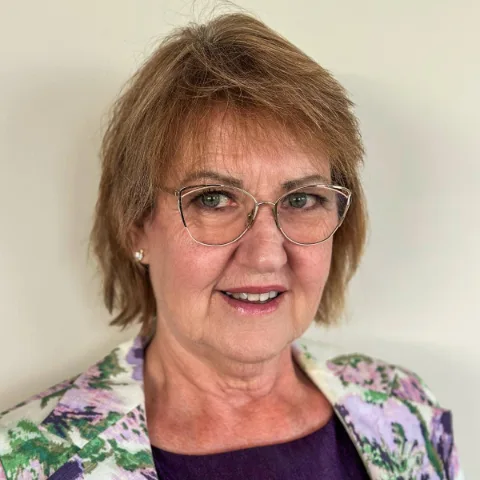
Sue Cook, Registered Social Worker

Sue Cook

Registered Social Worker, Founder and Clinical Director

couples counselling

Christina Furtado

Registered Psychotherapist

stephanie carpino

Stephanie Carpino

Registered Social Worker (MSW)

couples counselling

Aria Martinez

Therapist Counsellor

Travis Ford

Travis Ford

Operations Manager

Devika Rogers, Matching Specialist

Devika Rogers

Matching Specialist

Emily Naranja

Emily Naranja

Internal Bookkeeper

Your roadmap

1

Intake Phase

Getting started

The therapist makes sure parents are fully informed about child counselling, what to expect and their involvement in the process, with an opportunity to ask questions and share their insights and concerns.

2

Discovery Phase

Understanding your child

The therapist gets to know your child, understands what they are experiencing and hears the concerns and goals that brought your family to counselling. From that understanding, they develop a Care Plan with clear goals.

3

Working Phase

Working toward your child’s goals

The therapist and your child work directly on the goals in the Care Plan, adapting how they work to your child’s age, development and way of communicating, and adjusting when something is not helping.

4

Check-In Phase

Building on progress

As your child becomes more able to use what they have been working on outside counselling, appointments become less frequent. The therapist keeps checking how things are going and whether anything needs attention.

5

Follow-Up Phase

Staying connected

When regular counselling is no longer needed, active counselling ends. Your child remains connected to Family TLC and can return if counselling is needed again in the future.

Where we work

Three Offices and Virtual Care

Lake SimcoeAllistonElmvaleWasaga BeachPort PerrySuttonKeswickAngusInnisfil710111226354004044071Barrie2Orillia3Newmarket© OpenStreetMap
Bradford StLakeshore DrSanford StJohn St© OpenStreetMap

Barrie

160 Bradford St, Barrie, ON

Andrew St SColborne St WMississaga St WWest St S© OpenStreetMap

Orillia

Hartley Haus, 36 Andrew St S, Orillia, ON

Yonge StEagle St W© OpenStreetMap

Newmarket

17070 Yonge Street, Newmarket, ON

Anywhere in Ontario

Virtual

Secure video sessions anywhere in Ontario

FAQ

Social skills training for adults helps individuals develop the necessary skills to navigate social situations, build relationships, and communicate effectively. At Family TLC, we provide tailored interventions designed to address a wide range of skills, from basic conversation to problem-solving in complex social settings. Our therapists teach adults how to identify and manage social cues, leading to improved relationships and better social functioning.

Building Effective Communication: Social skills training for adults focuses on teaching how to express thoughts clearly and listen actively. This enhances both personal and professional interactions.

Improved Problem-Solving: The ability to problem solve in social situations is a crucial aspect of social skills training. Adults can learn techniques to navigate misunderstandings and resolve conflicts.

Enhanced Self-Confidence: Many individuals struggle with low self-esteem in social contexts. Our skills training helps participants build confidence, improving their ability to connect and interact with others in various settings.

Support for Adults with Special Needs: Family TLC also offers targeted support for individuals with autism and other conditions that may affect social interactions. Research from the University of Toronto and the Journal of Autism suggests that these interventions can be highly beneficial for improving social outcomes.

Social skills therapy provides adults with the tools they need to navigate and enhance their relationships, both personally and professionally. At Family TLC, we incorporate a range of strategies, including role-play and real-life practice, to teach essential skills. This therapy is designed to help individuals build stronger connections and feel more comfortable in various social settings.

Role-Playing Scenarios: By practicing real-world situations, adults gain insight into how to handle social challenges, such as making small talk, maintaining conversations, and responding to social cues effectively.

Conflict Resolution: Social skills therapy includes training in how to resolve conflicts in a healthy manner. This aspect is essential for improving both work relationships and personal connections.

Building Empathy: Through guided exercises, adults can learn to understand and share the feelings of others, fostering stronger emotional bonds.

Individualized Plans: Family TLC creates customized therapy plans that address each adult’s unique needs, ensuring that the skills learned are relevant and applicable to their life circumstances.

Social skills training is an essential tool in helping children develop the skills they need to navigate their social world effectively. At Family TLC, we use a combination of child psychology, role-play, and targeted interventions to teach children how to interact, share, and resolve conflicts. This training is crucial for helping children establish and maintain friendships.

Teaching Problem-Solving: Social problem solving skills are central to children’s social development. Our training helps children learn how to approach and solve problems they encounter with their peers, promoting cooperation and understanding.

Building Emotional Intelligence: Children learn to recognize their emotions and the emotions of others, a skill that is key in developing empathy and healthy relationships.

Improving Peer Interactions: Social skills training for children helps them understand social cues, express themselves appropriately, and build meaningful friendships that last.

Supporting Developmental Challenges: For children facing developmental challenges, such as autism, social skills training can significantly improve their ability to interact with peers, as shown in studies published in the Journal of Autism.

Social skills therapy covers a broad spectrum of skills, from basic conversation to navigating complex social dynamics. At Family TLC, we tailor therapy to address each individual’s needs, whether they’re dealing with social anxiety, conflict resolution, or making new friends. These skills are taught through a combination of direct instruction, role-play, and practice in real-life situations.

Effective Communication: Individuals learn how to start and maintain conversations, use body language effectively, and listen actively. These fundamental skills are essential for forming strong social connections.

Problem-Solving in Social Situations: Therapy teaches clients how to identify issues, think through possible solutions, and act accordingly in social settings. These skills are vital in resolving misunderstandings and improving relationships.

Managing Emotions: Social skills therapy also teaches individuals how to regulate their emotions and respond appropriately in emotionally charged situations, fostering better interactions with others.

Building Confidence: Social skills training helps individuals build the self-esteem needed to engage with others comfortably, making it easier to form and maintain relationships.

Social skills training or SST programs can be particularly beneficial for adults with autism, providing them with the strategies needed to navigate social interactions more confidently and effectively. At Family TLC, we offer specialized interventions that focus on teaching skills like reading social cues, managing emotions, and problem-solving in social contexts.

Tailored Strategies: The training for social skills in adults with autism is customized to meet the unique challenges they face. We use evidence-based strategies to teach them the social skills they need to thrive in everyday situations.

Building Social Confidence: Through structured practice and role-play, adults with autism can gain confidence in their ability to interact socially, reducing feelings of anxiety or isolation.

Improving Peer Relationships: Our programs focus on helping adults with autism build meaningful and lasting relationships by teaching them the social norms and behaviours expected in different social settings.

Supportive Environment: Family TLC’s trained professionals create a supportive space where individuals with autism can develop and practice social skills at their own pace, ensuring long-term success.

From our blog

Latest Articles

Articles for

Hands planting young tree in soil, sunny day.

Next step

Take the next step in whichever way suits you best.

Phone line open· closes at 4:30 pm

Phone line closed· opens the next business day at 8:00 am

Help us find your match. Our Matching Specialist will be in touch.

Help us find your match. We’ll contact you the next business day.

Call 705-737-3513

Prefer to talk? We’re here to listen

Leave a message after hours

Choose & Book a Therapist

View profiles & book online